
Arrest Warrants in Custer County
An arrest warrant is a judge's order telling a peace officer to bring a named person into custody. Colorado procedure builds one from a complaint plus a sworn affidavit. That affidavit must lay out facts that give a sound basis to believe a crime happened and that this person committed it. A judge reviews the showing. No search page creates these orders. In Custer County, a felony case runs through Custer Combined Court in the 11th Judicial District. The Colorado Rule 4 materials draw a line between an arrest warrant and a summons. A summons simply tells someone to show up in court. Skip that appearance after proper service, and the court may then issue an arrest warrant. The documents and the case history themselves control what applies.
Custer County Probable-Cause Review
Felony requests in Custer County pass through a local review before any judge sees them. Under Chief Judge Directive 20-10, the 11th Judicial District has a District Attorney's Office attorney screen a felony arrest or search warrant request first, unless an extreme exigency makes that step impractical. Exigency means an urgent condition that leaves no time for the usual review. That screening is not the judge's decision. The prosecutor only checks the paperwork. The judicial officer still looks at the affidavit alone and decides whether probable cause holds up. Each piece does its own job: the complaint states the charge, the affidavit carries the sworn facts, and the arrest warrant tells an officer whom to arrest.
- Probable cause
- A fact-based reason to believe an offense occurred and the named person committed it.
- Affidavit
- A written statement of facts sworn or affirmed as true.
- Exigency
- An urgent circumstance that may alter the normal review route.
What a Custer County Arrest Warrant Contains
The warrant and its court file show the legal authority behind an arrest, though public access turns on record status. Sealed, juvenile, protected, suppressed, or unexecuted material may simply be unavailable. Through the Judicial Branch record request form, you can ask for the complaint, information, register of actions, or any order in the case. Getting a copy still does not confirm an open warrant.
| Case or Warrant Number | The identifier assigned by the court; use the exact number printed on the notice. |
|---|---|
| Named Person | The person whom the order authorizes officers to arrest. |
| Alleged Offense | The charge tied to the probable-cause showing, not a finding of guilt. |
| Issuing Court | The court with authority over the warrant and next step. |
| Bond Terms | An amount or special conditions entered when applicable. |
| Issue and Return Data | Dates documenting issuance and an officer's return after execution. |
Ask the Custer Combined Court Clerk which records can be released. A missing document is not proof that no arrest warrant exists.
Custer County Email-Warrant Route
CJD 12-01 lays out the district's electronic and after-hours warrant procedure. The officer drafts the affidavit and the proposed warrant as separate editable files, phones the judicial officer, swears to the facts, and sends everything over for review. If the judge finds the legal standard met, the warrant gets signed. Bond amounts and special conditions go in when they apply. Custer sits among four counties listed in the district's priority table, and an after-hours memo steers officers to whichever judicial officer is reachable. Once the warrant is executed, the materials go to the clerk and the officer files a paper return. This workflow belongs to the court and law enforcement. It is not a way for the public to view a pending affidavit or an unexecuted warrant.
Key point: An official issuance process does not create a public arrest warrant search, and restricted records may stay unavailable before service.
How Custer County Arrest Warrants Are Served
Peace officers execute arrest warrants, and the Custer County Sheriff's Office is the local contact for service and for the records it holds. Official town materials tie Silver Cliff and Westcliffe police services to the sheriff. The sheriff posts no warrant-unit extension, so use the main line and ask. Execution puts the person in custody. Booking, a first appearance, and bond questions may follow, but the serving agency has no say in how the case ends. The clerk manages the file, not the officers' timing. Do not read anything into a docket, a payment result, or a name missing from an unofficial list. For records the sheriff holds, use the Records and Forms channel. Staff there can tell you whether a request, an identity check, or a call fits best, though disclosure rules may limit what goes to a relative.
Custer County Arrest Warrant Bond
Bond is the court's condition for release while a case moves forward. Under the 11th Judicial District bond schedule, the judicial officer who signs the arrest warrant sets the bond. Those schedule figures are not promises. The judge keeps discretion, and the charge, the law, the warrant's terms, and the facts of the case can all shape release. District materials describe a bond hearing within 48 hours after arrival at jail, subject to current law and case-specific exceptions. Custer's normal weekend setting is Saturday at 6 p.m., and families should confirm the current time with the court or the jail. A Custer bonding commissioner exists by district order, but that role guarantees neither eligibility nor any outcome. The public setting appears on the Judicial Branch bond-hearing page, which shows the standing schedule.
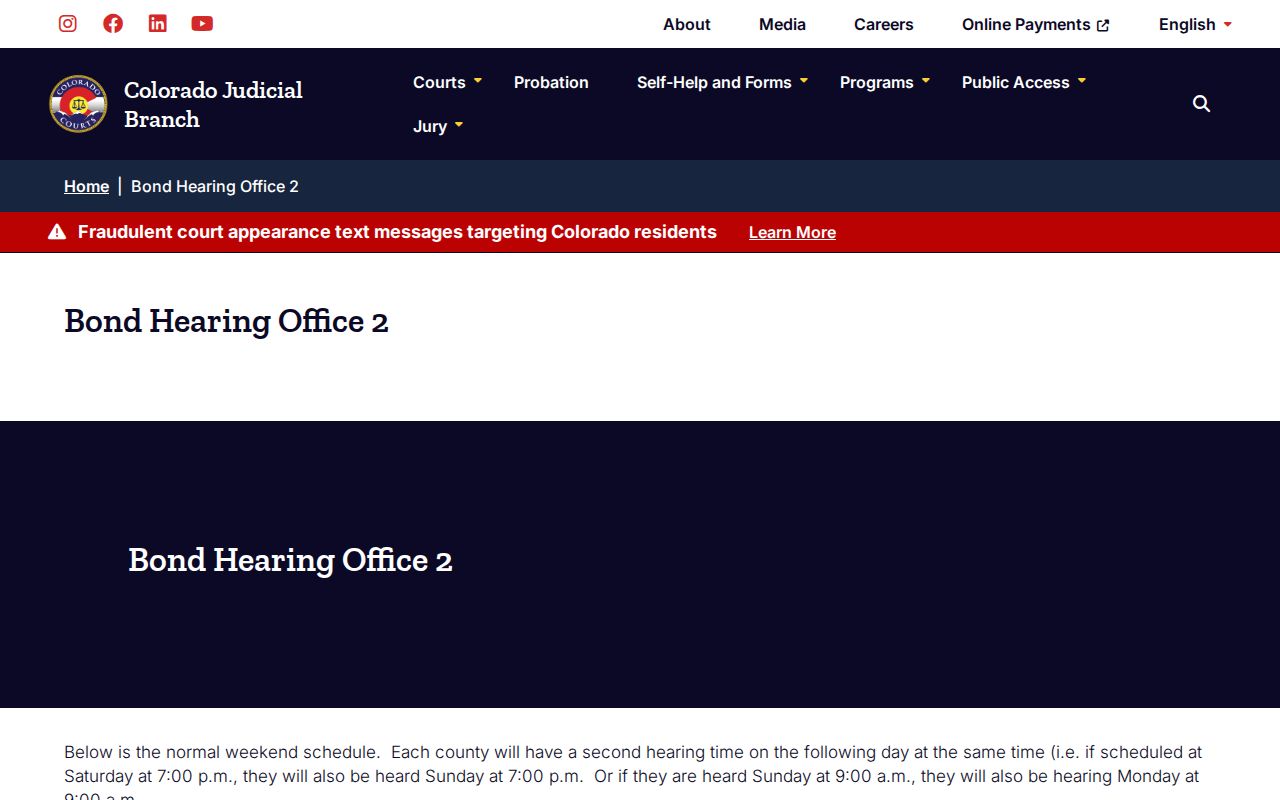
The schedule on that official page is a planning aid for Custer County only. Confirm the live setting before you rely on it.
Arrest Warrant vs Summons vs Bench Warrant
Three different papers can show up in one Custer County case file, and the wording on each matters. A summons, a bench warrant, and an arrest warrant are not the same thing, so read the issuing document and the current court status rather than trusting a broad online label.
| Feature | Arrest Warrant | Summons | Bench Warrant |
|---|---|---|---|
| Core direction | Authorizes arrest | Orders appearance without initial custody | Authorizes arrest after a missed duty |
| Usual basis | Probable cause of an alleged offense | A charge first handled by notice | Failure to appear, pay, or comply |
| Issuer | Judicial officer | Court or authorized process | Judge in the pending case |
| Safe response | Confirm and seek counsel | Appear as directed | Ask about appearance, recall, or quash |
A recall pulls a warrant back from execution. Quashing sets it aside by court order. Don't assume either happened just because a payment screen cleared; the Custer County bench warrant process covers duties tied to missed court dates.
Custer County Felony Notice Steps
A notice that names a felony case deserves careful handling. Start with the court, case number, and exact wording printed on it. The Custer Combined Court sits at 205 S. 6th Street in Westcliffe. Its clerk answers at (719) 783-2274 or CusterCountyClerk@judicial.state.co.us. Posted hours run Monday, Tuesday, and Thursday, 8 a.m. to 5 p.m., so confirm before you drive over for any Custer County warrant question.
- Ask whether the case number is valid and what public status can be confirmed.
- Ask if an appearance, filing, attorney, bond step, or identity check is required.
- Call the sheriff at (719) 783-2270 for execution or sheriff-record questions.
- Keep notes, receipts, filings, and the time of each status check.
A Custer County clerk can walk you through filing mechanics. Legal advice is off the table there; a lawyer can weigh the facts and advise how to appear.
What to Do If There's a Warrant for You
Verify the arrest warrant with the issuing court first. Ask whether it is still open, whether a lawyer may appear for you, whether bond has been set, and what the court wants for a voluntary surrender. A missed summons or a court error opens the door to asking about a recall or a motion to quash. Just know that no official Custer form promises same-day relief, so plan around real timelines rather than hopeful ones. If the warrant came out of a traffic case, the same questions apply, and the clerk of the issuing court is the one who can answer them. A relative helping out should have the person's consent and the exact case identifier in hand. The clerk or sheriff may insist on direct contact, proof of identity, written authorization, or a formal records request before saying anything about an active warrant. Hold off on emailing sensitive identifiers until staff confirms the approved channel.
Important: Speak with a Colorado lawyer before surrender, bond, recall, or quash decisions because the court controls the case-specific response.
Custer County Official Status Channels
Custer County publishes no public arrest warrant list or most-wanted roster. Take state case questions to the Combined Court Clerk. Questions about sheriff execution or law-enforcement records go to the Sheriff's Office. A court-document request can reach accessible filed material, while a sheriff CORA request covers what that office holds. Walk-in sheriff inquiries use 702 Rosita Avenue in Westcliffe. Non-emergency dispatch is (719) 276-5555 ext. 8; emergencies still go to 911.
Custer Combined Court
State case files, court status, filing mechanics, and record requests.
(719) 783-2274
Custer County Sheriff's Office
Execution questions and authorized sheriff record requests.
(719) 783-2270
The Colorado Bureau of Investigation public criminal history check leaves warrants out. A docket, a criminal history result, or a payment account is not confirmation of a current warrant in Custer County, so go back to the issuing court. Note: Federal arrest warrants run through separate federal court and U.S. Marshals channels, not the Custer County state route.